


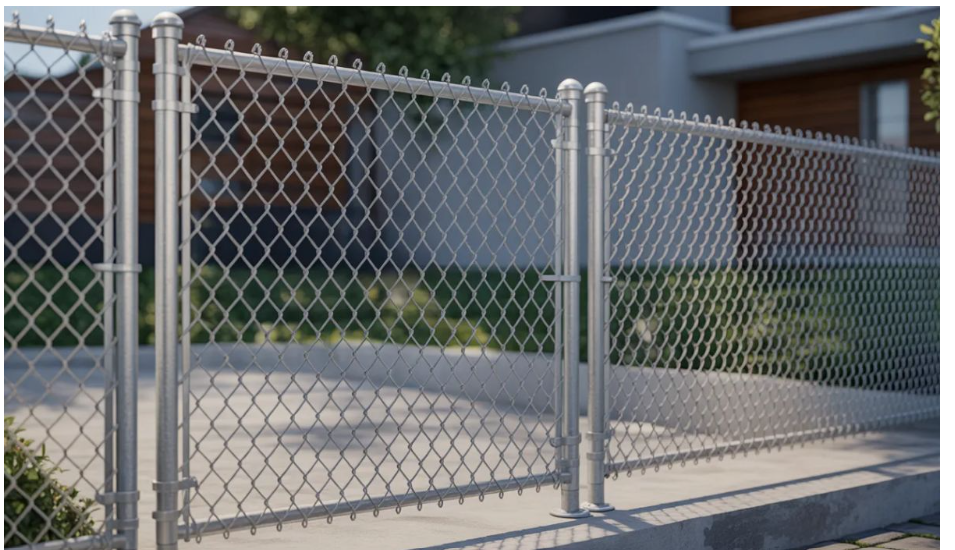
Chain-link fencing is among the most common, cost-effective, and durable fencing solutions in the UK market. It is widely used in residential and commercial applications and is a strong, visible, low-maintenance product with good long-term performance. The knowledge of the features, material information, and installation instructions would enable you to make an informed fencing decision, which will satisfy your specific requirements.
What is Chain Link Fencing?
Chain link (also known as mesh or wire fencing) is a woven, interlocking steel wire barrier. The mesh is in the shape of a diamond, which provides a strong boundary solution applicable in gardens, schools, sports grounds, farms, and commercial locations.
Chain link fencing is commonly manufactured from galvanised steel, with optional protective PVC coatings and colour options.
Key Benefits of Chain Link Fencing
The option of chain-linked fencing has a number of benefits:
- Durability and resistance to corrosion – The hot-dip galvanised steel can withstand rust and corrosion.
- Cost effectiveness – It is among the cheapest fencing materials as compared to timber and customised security fencing.
- Maintenance – Does not need to be painted or regularly treated.
- High visibility security – appropriate in areas where there is a need to monitor and have a line of sight.
- Universality of application – Can be used both at home, commercial premises, and agricultural lands, and in the street.
Material Quality and Options
The material of the chain link fencing greatly affects performance and life:
Galvanised Steel
That is the most widespread alternative. The zinc-coated steel wire prevents rust and corrosion, so it provides structural stability over a long period.
PVC Coated Chain Link
PVC coating – which is usually green or black – increases its resistance against corrosion, aesthetic value, and durability (particularly in coastal or humid conditions).
Wire Gauge & Mesh Size
Chain link fencing is in wire thickness (gauge) and mesh size (opening dimension). Smaller mesh sizes usually mean that it is used for security purposes, whereas the larger ones are used in general defense of the boundaries.
Components of Chain Link Fencing Systems
When constructing a complete fence, there are a number of components that are needed:
Chains and Mesh Rolls
Chain-linked fencing rolls are available in different heights, typically 0.9m, 1.2m, 1.5m, 1.8m, 2.4m, and 2.75m, according to the requirements of boundaries.
Posts
The fence consists of posts that support it:
- End Strainer Posts – Support fence start and end posts.
- Corner Strainer Posts – These are used where the direction changes occur in fencing.
- Intermediate Posts – These are placed between strainers support.
Steel or concrete posts may be used as extra-rigidity posts.
Accessories
Key fittings to be used are tension wires, hog ring clips, stretcher bars, and caps in order to fix the mesh to the posts.
How Chain Link Fencing Installation Works
Chain link fencing is installed in a systematic manner:
- Site Measurement/Planning- Linear metres should be measured accurately to calculate materials.
- Setting Posts — Posts must be set in concrete or dug in to ensure stability.
- Installation of Mesh Rolls: Unroll the mesh and connect it to the posts using clips and tension wires.
- Final touches -mbox post caps and tension adjustment to provide secure and tidy fencing.
Typical Costs in the UK
In the UK, the price of chain link fencing is affected by the quality of the material, height, and mode of installation:
- Material – Galvanised steel and PVC-coated mesh (galvanised or coated), depending on product prices, and prices can be high with coated products.
- Installation– This can be done by professionals, which adds extra to the total cost but secures deployment.
- Extras – Add security, gates/privacy slats, add to price.
Knowing these factors will help you budget for your particular fencing project.
Applications of Chain Link Fencing
Chain link fencing has many applications in any type of property:
Residential
Ideal in gardens, pet fences, and boundary fences.
Commercial & Industrial
Establishes safe fences around the warehouses, manufacturing, and storage yards.
Sports Facilities
Applied in the tennis court, ballparks, and playgrounds because it is visible and strong.
Agricultural
Perfect for livestock fences, farm boundaries, and the defence of crops.
Maintenance and Long‑Term Care
Chain link fencing is one of the selling points that enable it to have low maintenance. But not like timber or some ornamental fencing:
- Less Washing – Washing or sweeping is infrequent.
- Rust Prevention – Galvanised Coatings and PVC Coatings are extremely resistant to rust.
- Damage Repair – Sometimes, individual replacement of damaged mesh or posts may be unnecessary.
Choosing the Right Supplier and Materials
In order to guarantee performance and value:
- Select certified galvanised materials.
- Take into account pre-coated mesh when durability and aesthetics are important.
- Get suppliers in the UK with a good reputation and provide product calculators and specifications to suit your project requirements.
Conclusion
Chain link fencing is a viable and effective option for boundary security, visibility, cost efficiency, and long-term performance at diverse applications in the UK. You have the right materials, installation strategy, and supplier advice, such as the choices from First Fence’s wide range of chain-link fencing, and can develop a secure, durable, and customised fencing solution.
