


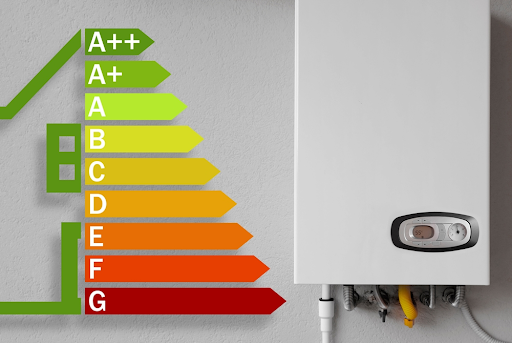
Keeping a home warm in London has never been more important, or more expensive. With energy prices remaining high and environmental concerns growing, property owners across the capital are looking for ways to heat their buildings more efficiently. London’s unique housing stock, ranging from Georgian townhouses to modern flats, means there is no single solution that fits every property. Understanding the options available and how they suit different types of London homes is the first step toward making an informed decision.
Why Energy Efficiency Matters in London
London is one of the most densely populated cities in Europe, and its buildings are responsible for a significant portion of its carbon emissions. Many of these structures were built long before energy efficiency became a priority, with solid walls, single glazing, and outdated heating systems that leak heat and waste money. For the average household, heating accounts for the largest share of energy bills, so improving efficiency can lead to substantial savings over time.
Beyond the financial benefits, there is a growing awareness of the environmental impact of domestic heating. The UK government has set ambitious targets for reducing carbon emissions, and the way Londoners heat their homes will play a major role in achieving these goals. Making properties more energy efficient is not just about cutting costs; it is about contributing to a cleaner, more sustainable city for future generations.
Assessing Your Property’s Heating Needs
Before choosing a new heating system, it is essential to understand what your property actually requires. London’s housing varies enormously in size, age, and construction. A Victorian terrace in Hackney will have very different heating needs from a new-build apartment in Canary Wharf. Factors such as insulation levels, window types, ceiling heights, and the number of rooms all influence how much heat is required and how it should be distributed.
A professional heat loss calculation can determine the exact capacity needed for your property. Oversizing a system leads to wasted energy and higher costs, while undersizing means the space will never reach a comfortable temperature. This assessment should also consider how the property is used. A family home occupied throughout the day has different requirements from a flat where the occupants are out at work for most of the week.
Modern Boiler Technology
For many London properties, especially those connected to the gas grid, a modern condensing boiler remains one of the most practical and efficient options. These systems recover heat from exhaust gases that would otherwise be lost, achieving efficiency ratings of over ninety percent. Compared to older models, which may operate at seventy percent efficiency or lower, the savings on fuel bills can be considerable.
When selecting a boiler, the type of property and hot water demand are important considerations. Combi boilers, which provide heating and hot water on demand without the need for a separate tank, are ideal for smaller flats and houses with limited space. System or regular boilers, which work with a hot water cylinder, are better suited to larger properties with multiple bathrooms where several taps may be used simultaneously.
It is worth noting that modern boilers are significantly more complex than their predecessors and must be installed by qualified professionals. A Boiler Installation Service London should always be carried out by a Gas Safe registered engineer who can ensure the system is fitted correctly, commissioned properly, and compliant with all current regulations.
Alternative Heating Systems
While gas boilers remain common, they are not the only option for London properties. Heat pumps have gained considerable attention in recent years as a low-carbon alternative. These systems extract heat from the air or ground outside and transfer it into the home. Air source heat pumps are particularly suitable for urban settings where ground space is limited, and they can work effectively even in colder temperatures.
However, heat pumps operate most efficiently in well-insulated properties with lower flow temperatures. Many older London homes would require significant upgrades to their insulation and radiators before a heat pump could deliver its full potential. For some properties, particularly those off the gas grid, biomass boilers or electric heating systems may also be worth considering, though each comes with its own set of practical and financial implications.
The Importance of Controls and Zoning
Even the most efficient heating system will waste energy if it is not controlled properly. Modern thermostats and smart controls allow property owners to manage their heating with far greater precision than traditional timers and thermostats. Smart thermostats can learn your routines, adjust temperatures based on weather forecasts, and be controlled remotely via a smartphone app.
Zoning is another powerful tool for improving efficiency. By dividing a property into separate heating zones, you can ensure that only occupied rooms are heated to full temperature. This is particularly useful in larger London houses where certain areas may be used infrequently. Thermostatic radiator valves on individual radiators provide a basic form of zoning, while more advanced systems can integrate with underfloor heating and smart home technology.
Insulation and Draught Proofing
No discussion of energy-efficient heating would be complete without mentioning insulation. A heating system, however advanced, cannot overcome the heat lost through poorly insulated walls, roofs, and floors. In London, where many properties have solid walls that cannot be fitted with standard cavity wall insulation, alternative approaches such as external or internal wall insulation may be necessary.
Loft insulation is one of the most cost-effective improvements available and is relevant to a large proportion of London homes. Draught proofing around doors, windows, and floorboards is another simple measure that can make a noticeable difference to comfort and energy bills. The UK government offers guidance on improving home energy efficiency, including available support schemes, which can be found at www.gov.uk.
Maintenance and Long-Term Performance
Once a new heating system is installed, regular maintenance is essential to keep it running efficiently. Annual servicing by a qualified engineer will ensure that the boiler or heat pump is operating at peak performance, identify potential issues before they become costly problems, and maintain any manufacturer warranties. In hard water areas of London, limescale buildup can affect efficiency and lifespan, so measures such as water softening or scale reducers may be beneficial.
Property owners should also be aware of the expected lifespan of their chosen system. A modern gas boiler typically lasts ten to fifteen years with proper care, while a heat pump may last longer but requires specialist maintenance. Planning for eventual replacement and budgeting accordingly can prevent the stress of an unexpected breakdown in the depths of winter.
Financial Considerations and Support
The upfront cost of upgrading a heating system can be significant, but it is important to view this as a long-term investment. The savings on energy bills, combined with potential increases in property value, often justify the initial expense. Various grants and schemes have been available to help Londoners improve their home energy efficiency, though these change over time and it is worth researching current options.
For those in older properties, the cost of necessary insulation improvements should be factored into the overall budget. While this adds to the initial outlay, it maximises the efficiency of whatever heating system is chosen and delivers the greatest comfort and savings.
Conclusion
Choosing the right heating solution for a London property requires careful consideration of the building’s characteristics, the occupants’ needs, and the available budget. Whether opting for a high-efficiency gas boiler, exploring heat pump technology, or combining multiple approaches, the goal is the same: to keep homes warm and comfortable while minimising energy waste and environmental impact.
If you are interested in learning more about how to improve your property’s overall efficiency and reduce running costs, you may find our related article on sustainable home improvements particularly useful: wittymagazine.co.uk.
