


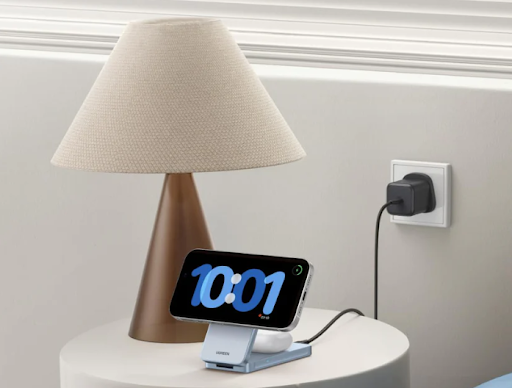
Most people do not think very hard about a charger until something about it feels slightly annoying. A cable falls off the nightstand. A connector needs to be flipped and adjusted in the dark. The phone is charging, but the setup still feels awkward enough to notice. That small feeling matters more than it seems. In everyday life, the best charging experience is rarely the one that looks most impressive on a spec sheet. It is the one that feels so easy and familiar that it blends into the rhythm of the day.
That is what makes an iPhone charger feel natural to use. It does not force extra thought. It does not interrupt a routine. It fits the way people already move through their spaces, handle their phones, and recharge in short, repeated moments.
Part of that natural feeling comes from how often iPhones are used throughout the day. They are not devices people pick up only when they need to call someone. They are used for navigation, photos, messages, payments, work apps, and constant small checks that fill the space between everything else. Because of that, charging is no longer a separate activity that happens only at the end of the day. It has become something woven into normal habits, whether that means setting the phone down on a desk between tasks, placing it on a nightstand before sleep, or topping it up while getting ready to head out again.
When charging becomes part of those small daily transitions, convenience starts to matter in a deeper way. A charger feels natural when it asks very little from the user. It should be easy to reach, easy to position, and easy to trust. If the process involves too many small corrections, such as finding the right cable, adjusting the angle, or checking twice to make sure power is flowing, then the experience starts to feel mechanical rather than seamless.
This is one reason the appeal of an iphone wireless charger goes beyond the simple idea of charging without a cable. For many users, the real benefit is that it reduces the number of tiny decisions involved in the process. Instead of plugging in, they place the phone where it belongs and move on. That sounds like a small difference, but repeated every day, it changes how charging feels. It becomes less of a task and more of a natural endpoint to a movement that was already happening.
Placement is a bigger part of charger design than people often realize. A good charger works with the environment around it. On a bedside table, it should feel easy to use when the room is dark and attention is low. On a desk, it should not create clutter or force the user to rearrange other objects just to make space for it. In a shared living area, it should feel intuitive enough that the phone can be picked up and set down without breaking the flow of the moment. Natural use is not just about charging technology. It is also about physical context.
Another factor is how well the charger matches the way people actually handle an iPhone. Many users do not want charging to mean giving up access to the device for a while. They still want to glance at notifications, unlock the screen, reply quickly, or pick up the phone and leave without dealing with extra steps. That is why alignment, stability, and ease of removal all play a role in the overall experience. A charger can work perfectly well from a technical standpoint and still feel slightly off in real use if it adds hesitation to those everyday gestures.
A magnetic iphone charger often feels more natural because it responds to that need for simplicity and alignment. The interaction is clearer. The phone meets the charger in a way that feels guided rather than approximate. That kind of physical confidence matters. Users do not want to think about whether they placed the phone correctly. They want the process to feel obvious and repeatable. The more certainty a charger provides, the less attention it demands.
Visual clarity also shapes how natural a charger feels. People tend to prefer accessories that do not make a space feel more chaotic than it already is. A clean setup with less visible cable mess often feels easier before the charger is even used. That is not only about appearance. It is also about usability. When the charging area feels calm and organized, the action itself becomes simpler. The user can see where the phone goes, what the charger is doing, and how it fits into the space. A natural product often succeeds because it reduces both physical friction and visual noise.
There is also a behavioral side to this. People build routines around objects that feel dependable. A charger becomes part of daily life when it works in the same easy way every time. There is no second guessing, no awkward reach, and no extra correction. Over time, that consistency matters more than a momentary feature advantage. A charger that feels familiar and low effort becomes the one people keep returning to, even when other options are available.
That is why the conversation around an iphone wireless charger is often really a conversation about habit. Users are not just choosing a way to add battery. They are choosing a way to make charging fit more smoothly into the day they already have. In the same way, a magnetic iphone charger appeals because it supports a more intuitive kind of interaction, one that feels closer to placing and continuing rather than stopping and managing.
In the end, what makes an iPhone charger feel natural to use is not one dramatic feature. It is the combination of easy placement, reliable alignment, minimal friction, and a design that respects everyday behavior. The best chargers do not demand attention. They support the small routines that already exist and make them feel a little easier. That is what turns charging from a necessary task into something that simply feels right.
