


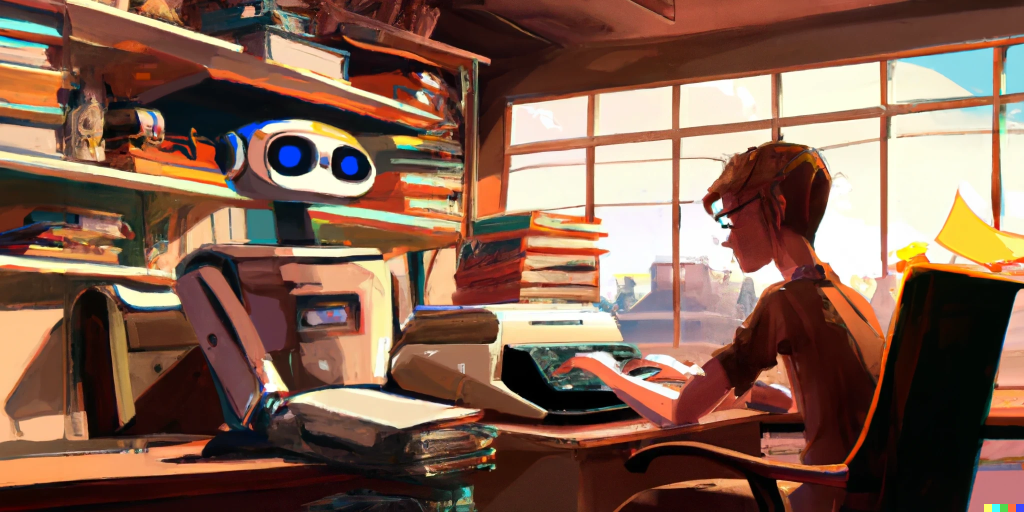
Creative writing has always been one of the most distinctly human activities a domain where imagination, emotion, cultural knowledge, and linguistic craft combine to produce something that communicates experience from one mind to another across time and distance. The emergence of AI writing tools capable of generating coherent, contextually appropriate, and occasionally genuinely interesting prose has therefore raised questions that go well beyond the technical. What does it mean for creativity when a machine can produce a story? What changes for writers, readers, and the broader culture of storytelling? And what, if anything, remains irreducibly human about the craft?
These are not simple questions, and the most honest answers involve acknowledging genuine uncertainty. AI writing tools are developing rapidly, their capabilities and limitations are shifting, and the cultural and creative implications of their widespread adoption are still being worked out in real time. What is possible to say with confidence is that the tools already available have changed the creative writing landscape in ways that are worth understanding both for people who use them and for people who are simply curious about where storytelling is going.
What AI writing tools actually do
The current generation of AI writing tools including the large language models that underpin most commercially available creative writing assistants work by identifying and generating patterns in language based on enormous training datasets. They are, in a technical sense, very sophisticated pattern-completion systems: given a prompt, a context, and a set of parameters, they produce text that is statistically likely to follow from those inputs in ways consistent with the patterns they have learned.
This technical description undersells the outputs somewhat, because the patterns these systems have learned are extraordinarily complex they include not just grammatical and syntactic patterns but narrative patterns, genre conventions, character archetype structures, tonal registers, and the kind of contextual consistency that makes prose feel coherent across paragraphs and scenes. The result is that these tools can produce output that reads, to a casual observer, like competent human writing across a wide range of styles and genres.
What they do not do and what current systems are genuinely not capable of is experience anything. They have no stake in the stories they generate, no personal history that shapes their perspective, no emotional investment in characters or outcomes. This absence is the source of both their most significant limitation and one of their most useful characteristics as creative tools: they produce without preference, which means they can generate variations and possibilities at a speed and volume that human writers cannot match.
AI and fan fiction a natural partnership
Among the many forms of creative writing that AI tools have been applied to, fan fiction represents one of the most natural fits. Fan fiction stories written by fans of existing properties, using established characters, worlds, and relationships as raw material has always been a high-volume, high-enthusiasm creative form. The fan fiction community produces an enormous quantity of content, ranging from brief character sketches to multi-volume novel-length works, across every imaginable fandom and genre combination.
The characteristics that make AI useful as a creative tool align well with what fan fiction writers often need. Generating initial scenarios and plot frameworks, exploring “what if” variations on established storylines, producing first drafts that can be refined and personalised, or simply overcoming the blank-page paralysis that affects every writer AI tools can contribute meaningfully to all of these stages of the fan fiction writing process.
The growing availability of tools specifically designed to support fan creative work like this AI-powered fan story generator reflects both the demand from fan communities and the genuine utility these tools can provide when well-calibrated to the specific needs and conventions of fan creative writing.
The human writer in an AI-assisted creative process
The curator and the generator
The most productive framing for the relationship between human writers and AI tools is probably the distinction between generation and curation. AI systems are good at generating producing large quantities of varied output quickly, exploring the space of possible continuations from a given starting point, and maintaining surface-level consistency across extended text. Human writers are good at curating identifying which generated possibilities are actually interesting, which align with their creative intentions, which capture something emotionally true, and which should be discarded.
This division of labour AI generates, human curates is already the implicit model in most productive human-AI creative collaborations. The writer provides the vision, the emotional investment, the thematic intention, and the critical judgment. The AI provides volume, variation, and a kind of generative fluency that can break creative blocks and surface possibilities the writer would not have arrived at alone. Neither component produces good creative writing independently; together, they can produce more and better work than either could alone.
Voice, perspective, and what AI cannot provide
The qualities that make a piece of writing genuinely distinctive a recognisable voice, a particular perspective on the world, the sense that a specific human consciousness is behind the words are precisely what AI systems cannot authentically provide. They can imitate voices, adopt personas, and approximate perspectives based on the patterns in their training data. But imitation is not the same as authentic expression, and experienced readers can generally sense the difference even when they cannot articulate it.
This means that the most meaningful use of AI in creative writing is probably as a tool for writers who already have something to say a voice, a perspective, a set of preoccupations and who use AI assistance to say it more efficiently, explore it more extensively, or overcome the practical obstacles that get between intention and output. The AI expands the writer’s capacity without replacing the writer’s purpose.
The fan fiction community and AI ongoing conversations
The fan fiction community’s relationship with AI writing tools is, predictably, complex and contested. Some writers embrace AI assistance enthusiastically using it to produce more content, explore more scenarios, and share more with their communities than they could produce working entirely alone. Others reject AI-generated or AI-assisted content on principle, arguing that the value of fan fiction lies precisely in its human authorship and the personal investment that implies.
Both positions reflect genuine values. The enthusiasm for AI assistance reflects the fan creative community’s longstanding culture of prolific production and generous sharing a culture where more content, more exploration, and more creative possibility are generally valued. The resistance reflects an equally longstanding value placed on authentic human creativity and the personal connection between writer and reader that human authorship implies.
Navigating these competing values is something the fan fiction community is actively working out, with different platforms, fandoms, and communities arriving at different norms. The conversation is ongoing and likely to remain so for some time which is appropriate, given that the tools themselves are continuing to develop and the implications of their widespread use are still becoming clear.
Practical applications for writers at every level
Setting aside the larger cultural debates, there are practical applications of AI writing tools that are useful for writers at every level of experience and ambition. For beginning writers, AI can provide a low-stakes way to experiment with different styles, genres, and narrative structures generating examples to react to and learn from without the pressure of producing polished work immediately. For experienced writers, AI can serve as a rapid prototyping tool quickly generating rough versions of scenes or passages that can be significantly revised and personalised.
For writers struggling with specific creative problems a plot hole that needs filling, a character voice that is not coming naturally, a scene transition that is not working AI can generate multiple possible solutions to evaluate. The writer retains full judgment about which solutions are worth developing, but the generation of multiple options can break creative log-jams that might otherwise persist for days.
Creative tools for the modern storyteller
The ecosystem of creative tools available to writers and storytellers has never been richer than it is today. Platforms like Ai Fanfic Generator bring together a range of generators and creative utilities from character name tools to story concept generators to themed content creators that support writers at different stages of their creative process, providing starting points, raw material, and creative prompts that can spark ideas and overcome the practical obstacles between intention and output.
Where creative writing with AI is heading
Predicting the trajectory of AI capabilities is a notoriously unreliable exercise the field has repeatedly surprised both optimists and pessimists with developments that were faster, slower, or simply different from what was anticipated. What seems relatively safe to say is that AI writing tools will continue to improve in their ability to produce surface-level coherent and contextually appropriate text, and that their integration into creative workflows will deepen across the writing community.
What seems equally safe to say is that the qualities that make writing genuinely valuable to human readers authentic voice, emotional truth, the sense of a particular human consciousness engaging with the world and inviting other consciousnesses to share that engagement will remain distinctly human contributions to the creative process. The tools will become more capable; the humans who use them well will become more productive. The writing that matters most will still come from people who have something real to say and the craft to say it.
