


Waking up soaked in sweat at 3 a.m. is not just uncomfortable — it wrecks your entire sleep cycle. Your body needs its core temperature to drop by roughly 1 to 2 degrees Fahrenheit to enter deep, restorative sleep. When your bedroom, your mattress, or your bedding traps heat, that drop never fully happens. The result is light, fragmented sleep, morning grogginess, and the nagging feeling that no matter how long you were in bed, you never really rested.
The good news is that overheating at night is almost always fixable. Below are 12 science-backed strategies — covering room temperature, bedding choices, pre-sleep habits, and sleep surface upgrades — that make a measurable difference for hot sleepers. Each one builds on the last, so if you apply several together, the effect compounds.
Why Do You Overheat at Night?
Before fixing the problem, it helps to understand it. Your body uses thermoregulation to initiate and maintain sleep — your core temperature drops in the evening as melatonin rises, signaling to your brain that it is time to sleep. When that temperature drop is interrupted by an overly warm environment, your body fights to cool itself by increasing sweat production and waking you up.
Common culprits include: room temperature above 67°F, mattresses with poor airflow, synthetic bedding that traps moisture, hormonal fluctuations, and high humidity. Addressing even two or three of these factors typically produces a noticeable improvement.
12 Ways to Sleep Cooler at Night
1. Set Your Room Temperature Between 60 and 67°F
This is the single most impactful change most people can make. Research consistently puts the optimal sleep temperature range at 60–67°F (15.6–19.4°C). At this range, your body does not have to work hard to maintain the core temperature drop that drives deep sleep.
If air conditioning is not an option, a ceiling fan on a low counter-clockwise setting creates a wind-chill effect that can drop the perceived room temperature by several degrees without cooling the actual air.
2. Upgrade to a Cooling Mattress or Mattress Topper
Standard memory foam is the enemy of hot sleepers. It is a dense material that absorbs and holds body heat, which is exactly the opposite of what you need. The most effective hardware fix for overheating is switching to a mattress or topper built with active heat-dissipation technology. EGOHOME’s Ventilated Gel Topper addresses this directly using their proprietary AeroFusion Foam® — a gel-infused open-cell structure that adapts to your body without temperature-related changes. The ventilated pores create a cellular-like foam structure that actively increases airflow through the material, so heat does not accumulate beneath you.
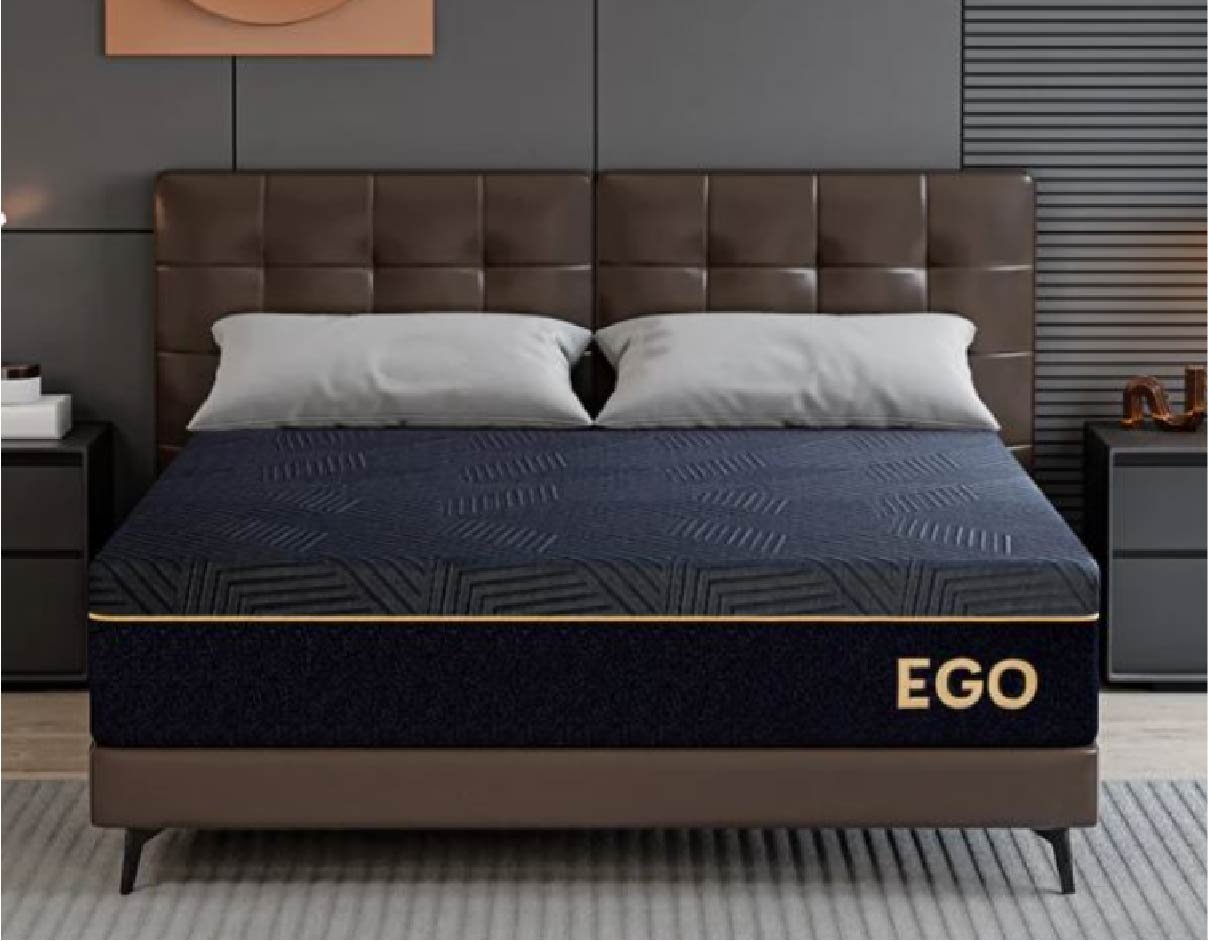
For hot sleepers who need a full mattress replacement, the EGOHOME Black 14″ Hybrid features an Anti-heat™ Graphene Cooling Cover and Liquid Gel CoolFlex™ Foam that work together to pull heat away from the body. Graphene conducts heat roughly 2,000 times more effectively than copper — so you get an instant cool-to-touch surface that does not warm up during the night the way standard foam covers do.
3. Switch to a Cooling Pillow
Your head and neck generate significant body heat during sleep — and a standard foam or polyester pillow traps every bit of it. Swapping to a purpose-built cooling pillow is one of the fastest upgrades available. EGOHOME’s Cooling Gel Pillow uses a moisture-wicking cover and cooling gel bubbles to maintain a consistent chill throughout the night. One verified buyer noted they purchased it specifically for a partner suffering from hot flashes — and it was the first time in years they slept through the night without overheating.
If you prefer adjustability, the EGOHOME Cooling Adjustable Pillow features a dual-sided design — cooling ice silk on one side, breathable rayon on the other — plus removable shredded Gel AeroFusion Foam® fill that lets you customize both height and firmness. For hot sleepers, flipping to the ice silk side takes maybe two seconds and immediately lowers the surface temperature against your face.
4. Choose Breathable Bedding
The material your sheets are made of matters more than most people realize. Cotton (especially percale weave), bamboo, linen, and Tencel all allow moisture to wick away and airflow to pass through. Polyester, microfiber, and flannel trap both heat and humidity, turning your bed into an insulated enclosure.
Look for sheets with a thread count between 200 and 400 — above that, the weave becomes too tight for breathability regardless of fiber type. Bamboo is the standout choice for hot sleepers specifically: it is naturally moisture-wicking, softer than cotton, and stays cooler to the touch.
5. Optimize Bedroom Airflow
Even with a cooling mattress and breathable sheets, stagnant air makes a bedroom feel warmer than it is. Cross-ventilation — opening windows on opposite sides of the room — creates airflow that removes heat and moisture from the space. If outdoor air is warmer than indoor air, close windows and use a fan to circulate indoor air instead.
Position a box fan facing outward in one window to exhaust hot air out of the room, and open a second window on the opposite side to draw in cooler air. This method is more effective than simply pointing a fan at the bed.
6. Take a Warm Shower Before Bed
This one surprises most people. A warm (not cold) shower 60 to 90 minutes before bed actually lowers your core body temperature faster. The warm water brings blood to the skin surface, and as you step out, the rapid evaporation of moisture from your skin draws heat away from your body. Your core temperature drops more quickly than it would have without the shower.
A cold shower has the opposite effect — it constricts blood vessels, trapping heat inside your core rather than releasing it to the surface.
7. Block Out Daytime Heat
Rooms that face west or south absorb significant solar heat during the afternoon. Blackout curtains or thermal blinds prevent solar gain from accumulating in the room throughout the day. By the time you go to bed, a room with blocked windows can be several degrees cooler than one that received direct sunlight for hours.
This is particularly effective in summer and in climates where nighttime temperatures do not drop significantly — the room simply does not heat up as much to begin with.
8. Sleep Lower to the Floor (or on a Platform Frame)
Hot air rises. A bed elevated on a tall frame sits in a warmer layer of room air than a low-profile platform frame or a bed closer to floor level. This effect is subtle but real in rooms without consistent airflow. A platform frame also allows air to circulate beneath the mattress, which helps the mattress itself remain cooler by preventing heat from building up in the base layer.
9. Reduce Humidity
High humidity makes a room feel significantly warmer than the actual temperature because it prevents sweat from evaporating off your skin — which is your body’s primary cooling mechanism. A dehumidifier in a humid climate can make a room that is 72°F feel more like 67°F. Target indoor humidity levels between 40 and 60 percent.
In dry climates, a fan with a bowl of ice placed in front of it acts as a makeshift evaporative cooler. As the ice melts, the water evaporates and cools the air blown by the fan.
10. Avoid Alcohol and Heavy Meals in the Evening
Alcohol raises your body temperature and suppresses deep sleep stages, even if it helps you fall asleep initially. A heavy meal close to bedtime activates digestion, which increases metabolic heat production. Both effects compound the overheating problem for people who already sleep warm.
Avoid alcohol within three hours of bed and eat your last full meal at least two hours before sleep. If you need something in the evening, a light snack — particularly one with tryptophan or complex carbohydrates — does not generate the same thermal load as a full meal.
11. Use a 5-Zone Cooling Topper for Targeted Heat Zones
Not all parts of your body generate equal heat. Hips, the lower back, and shoulders are the primary heat zones during sleep. A EGOHOME 5-Zone Gel Topper addresses this with targeted AeroFusion Foam® zones that provide differentiated support and cooling across distinct body regions. The zoned design means the areas generating the most heat get the most active cooling, rather than a uniform layer that may over-cool some zones while under-cooling others.
It is available in 2, 3, and 4-inch thicknesses, is CertiPUR-US and OEKO-TEX certified, and comes with a 30-night home trial and free shipping. For anyone who already has a decent mattress but wakes up warm in specific areas — particularly the hips or lower back — this is the most targeted hardware solution available.
12. Consider a High-Tech Cooling Sleep System
If individual upgrades have not fully solved the problem, the most comprehensive solution is a purpose-built cooling sleep system. EGOHOME’s Adjustable Bed Bundle pairs the Black Hybrid mattress — with its graphene cover and copper gel foam — with a motorized adjustable base. Elevating the head slightly (even 10 to 15 degrees) improves airflow around the upper body and reduces the pooling of warm air that occurs when sleeping flat. For hot sleepers who also deal with acid reflux or snoring, this addresses multiple issues simultaneously.
The adjustable base also supports zero-gravity positioning, where the legs are raised slightly above heart level. This position improves circulation, which in turn makes thermoregulation more efficient — your body distributes and releases heat more effectively when circulation is not restricted.
EGOHOME Cooling Products at a Glance
All EGOHOME products below include free shipping, easy returns, and a 30-night or 100-night trial. CertiPUR-US and OEKO-TEX certifications apply across the range.
| Product | Cooling Technology | Best For |
| EGOHOME Black 14″ Hybrid | Graphene cover + Copper Gel CoolFlex™ | Full mattress replacement |
| Ventilated Gel Topper | AeroFusion Foam® + ventilated pores | Upgrading existing mattress |
| 5-Zone Gel Topper | Zoned AeroFusion Foam® | Targeted hip/shoulder cooling |
| Cooling Gel Pillow | Gel bubbles + moisture-wicking cover | Head & neck overheating |
| Cooling Adjustable Pillow | Ice silk + Gel AeroFusion fill | Customizable all-night cooling |
| Adjustable Bed Bundle | Graphene mattress + elevated positioning | Complete hot sleeper system |
Frequently Asked Questions
What is the best temperature for sleeping?
The ideal bedroom temperature for sleep is between 60 and 67°F (15.6–19.4°C). At this range, your body can complete the core temperature drop needed for deep sleep without having to actively fight ambient heat.
Why do I get so hot at night even in a cool room?
If your room is cool but you still overheat, the issue is likely your sleep surface. Standard memory foam traps body heat far more than it releases it. A cooling mattress topper with gel infusion and ventilated foam — like the EGOHOME Ventilated Gel Topper — directly addresses the surface-level heat buildup that room temperature alone cannot fix.
Does a cooling pillow actually make a difference?
Yes, particularly for people who generate significant head and neck heat. The EGOHOME Cooling Gel Pillow maintains a consistently cool surface using gel bubble technology and a moisture-wicking cover. Multiple verified buyers report sleeping through the night without waking up from heat for the first time after switching to it.
Is it better to sleep without covers?
For some hot sleepers, yes. But for most people, sleeping with a very lightweight breathable layer is more comfortable because it helps wick moisture away from the body. A bamboo or Tencel sheet alone — without a heavy duvet — is often the right balance: it covers without insulating.
How do I sleep cooler without air conditioning?
Cross-ventilate the room using fans, block daytime solar heat with blackout curtains, take a warm shower 60 minutes before bed, switch to breathable bedding, and replace your mattress topper with a gel-ventilated option. Combining these changes can reduce perceived sleeping temperature by 5 to 8 degrees without any air conditioning.
The Bottom Line
Sleeping cooler at night is not about one single fix. It is about addressing the problem at every layer — room environment, bedding materials, pre-sleep habits, and sleep surface. Each upgrade stacks on the previous one.
The hardware upgrades that make the biggest individual difference are a cooling mattress topper and a cooling pillow. If you have never used a gel-infused, ventilated foam topper or a pillow with active cooling technology, the difference is immediate and obvious. EGOHOME’s cooling range — from the 5-Zone Gel Topper to the Cooling Gel Pillow and the Black Hybrid mattress — was built specifically for this problem. All products come with free shipping, a trial period, and CertiPUR-US certification, so there is no risk in testing whether a cooler sleep surface changes how you feel in the morning.
