


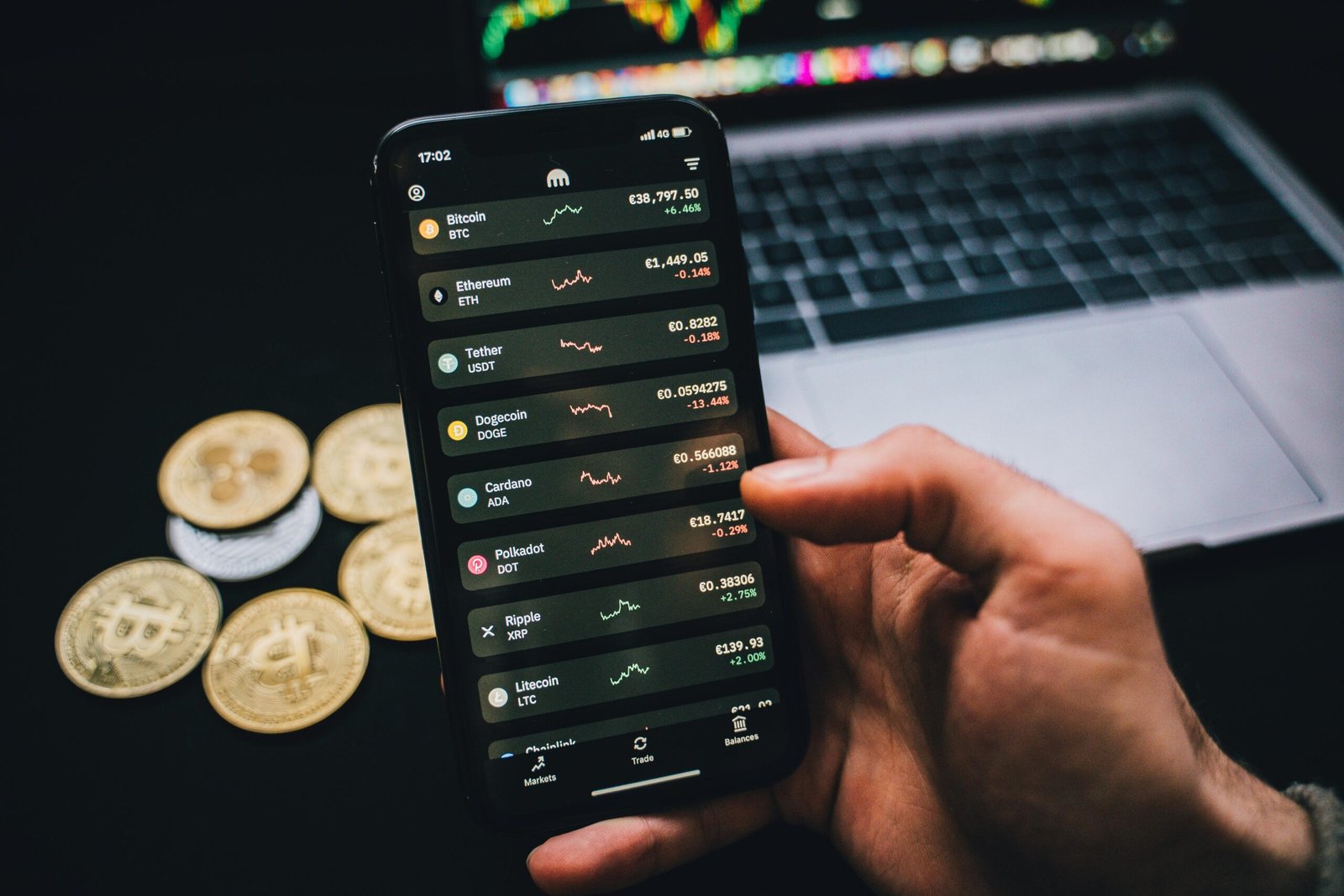
Cryptocurrency evolution might’ve been jammed by the artificial intelligence boom, but this will change in 2026. As some people speculate that the AI bubble will burst, investors’ interest will turn to cryptocurrency and blockchain again, allowing developers and innovators to contribute to the sector’s growth.
But before we dive into the most anticipated features of cryptocurrency, we must cover the strategies investors and traders should implement. With more global uncertainty ahead, users must be prepared for the prices to shift due to monetary policy changes, new regulations, and institutional demand, so being wired to the latest crypto news today is imperative. Using the news to forecast future prices is helpful, especially when it discusses upcoming legislative changes or efforts to address negative outcomes.
So, here’s how the 2026 crypto season is expected to look in terms of technological innovation.
Image source: https://www.pexels.com/photo/hands-using-smartphone-for-crypto-trading-analysis-34482105/
A better infrastructure for stablecoins
Stablecoins gained considerable attention and legal support as multiple jurisdictions included them in regulatory frameworks. Stablecoins are pegged to fiat currencies, such as the US dollar, making them easier to regulate because they’re less volatile than other cryptocurrencies. Therefore, the EU and US have included them in the MiCA (Markets in Crypto-Assets) and GENIUS (Guiding and Establishing National Innovation for U.S. Stablecoins) regulations.
Luckily, things are evolving, and we expect improved infrastructure for stablecoins that will enable both issuers to reach their audiences and users to take full advantage of them. And while more FinTechs are issuing stablecoins, they must manage the challenges posed by payment platforms, especially in cybersecurity.
In other words, all parties must be assured that they have a guarantee if they want to redeem their money or seek insurance. Therefore, startups are upping their game to set high standards for the security and safety of funds.
Are blockchain infrastructures ideal?
Since stablecoins are part of the decentralized industry and live on blockchains, it would seem efficient to enhance these networks and close the gaps between centralization and decentralization. However, the best ledgers must meet certain objectives to be introduced, such as:
- Scalability: the ability to process massive amounts of transactions without network congestion;
- Low transaction fees: ensuring stablecoins are viable for microtransactions or international remittances;
- Security: requiring the highest standards for consensus mechanisms and safe smart contract execution;
But the list goes on: blockchains need smart contract support to eliminate vulnerabilities, as well as interoperability technology to enable users to transfer stablecoins to other networks.
The fusion of AI with cryptocurrency
Instead of fighting it, the cryptocurrency industry can work along with artificial intelligence. A few projects have already emerged, such as Render, which uses both technologies to harness unused GPU energy and enable rendering for artists and developers.
But this intersection goes beyond crypto assets and blockchains. AI could improve the security and efficiency of cryptocurrencies, for example, by detecting fraudulent transactions and suspicious activities on the blockchain. AI can also help smart contracts adapt automatically to demands for decentralized autonomous organizations (DAOs) to be more responsive and safer.
For now, one of the most common use cases for AI in the industry is in trading, where AI bots leverage machine learning to identify trends and forecast prices, enabling investors to adapt their strategies more efficiently. However, users are advised to conduct their own research for their unique portfolios and to exercise due diligence when investing in crypto.
What are some promising crypto AI projects?
Besides Render, the crypto AI market has grown significantly, bringing forward exciting projects that pave the way for innovation. Fetch.ai is one of the most popular, and it’s known for its contributions to the DeFi ecosystem, supporting the development of autonomous agents to settle transactions or manage logistics.
SingularityNET is another notable project where developers leverage their AI algorithms to monetize on the blockchain, building the next generation of decentralized AI. Numerai is also ambitious, with its teams of data scientists creating predictive models for financial markets.
Enhanced ETF institutionalization
Finally, ETF institutionalization is one of the most-anticipated features for investors and companies alike, as the SEC (US Securities and Exchange Commission) approved spot Bitcoin funds. Now, BTC ETFs are part of mode portfolios or 401Ks, with other assets like Ethereum being introduced gradually.
Since large institutions are increasingly adopting ETFs, the regulatory framework around them is easier to address, thereby improving global sentiment toward decentralized assets. As the market matures, predictions on productive ETFs this year expand to assets like Polkadot, Algorand, and Cardano, but they will also tap into the world of:
- Metals: depending on how metals like gold, silver, and copper evolve this year, their ETFs might experience a surge in prices and interest;
- Solar and alternative energy: as solar energy gets more affordable, clean-energy ETFs might steal the spot in 2026;
- S&P 500-based ETFs: the rising shareholder payouts and easier fiscal policies will support the rise of the stock market and its related ETFs;
What makes an ETF efficient?
While ETFs have become more popular and valuable, users must exercise caution when investing in them. One special feature they offer is tax benefits related to capital gains tax liability. Since these gains are distributed to shareholders at year-end and are significantly lower than mutual fund gains, ETFs offer this advantage to users.
Choosing to invest in a specific ETF must be done according to the following aspects:
- The investment focus that handles how much of your portfolio is allocated to each asset class;
- The index that covers the best markets with enhanced equities and broad indices;
- The performance and tracking differences of an ETF help understand the ongoing costs of acquiring an ETF;
Conclusion
While many are excited about the 2026 crypto season, others have already reinforced their portfolios to be prepared for the worst. It’s ideal to consider the potential challenges posed by international policies, conflicts, and inflation, but looking forward to innovation helps set the tone for adaptation. Therefore, expect the crypto market to benefit from superior infrastructure for stablecoin use, better collaboration between crypto and artificial intelligence, and the boom in institutional ETFs.
